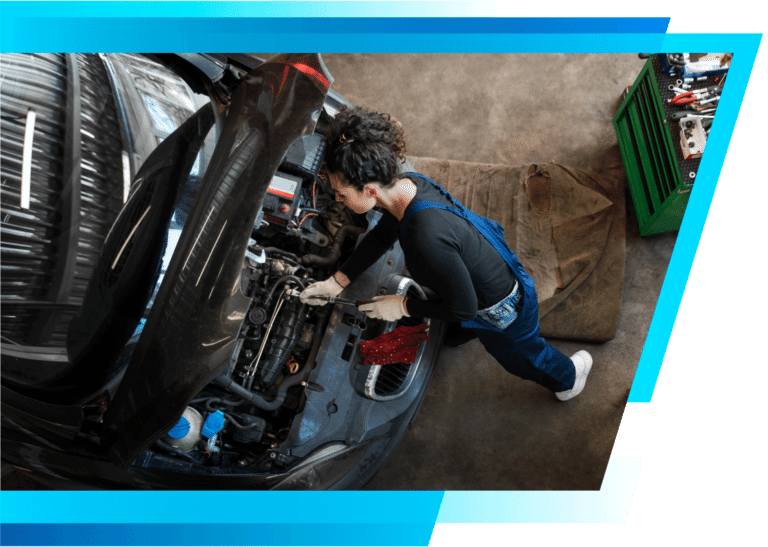
Most customers never even go past a wall found in serious body shops. Back there, that’s a different bay, with its own tools, its own dust extraction, and its own rules. It looks like overkill. It is not. That wall is made possible by a metal that acts nothing like the steel used to construct your car once upon a time.
Aluminum crept in and gave the auto body repair shop a makeover. So Ford shoved it on the F-150 body. And Tesla even built entire buildings around it. It’s been used by Audi, Jaguar, Porsche, and Land Rover for years. If you own either of those, your car can’t be repaired in the same bay where the shop just ground a steel fender.
Why is that more important than it sounds? Steel dust laughs in the face of aluminum. Grind steel, allow the particles to settle on a bare aluminum panel, and you have put in motion a slow chemical reaction that devours the metal from beneath the paint. The reason is that Relux Collision keeps aluminum work and other construction separated. The contamination is absent. It surfaces two years later, bubbling beneath a finish that ought to have been clean.
The Galvanic Corrosion: Without the Chemistry Course
Put two metals side by side, moisten them, and one will begin to sacrifice itself. This is called galvanic corrosion, and aluminum always loses to steel in that battle.
Sacramento isn’t in the corrosion town. Maybe that is why people simply overlook this. Fog comes over the valley, condensation puddles on cars for hours, and months of spring bring cold air off the Delta in winter. Moisture is moisture.
Which leaves a stray steel particle lodged in an aluminum quarter panel, with everything it needs.
The result:
- Paint that blisters, no polish can fix
- Pitting under the clearcoat
- Structural deterioration in a panel
- A redo of a repair from bare metal
What a Real Aluminum Bay Actually Contains
Auto repair shops need an entire aluminum zone; it needs its own equipment, and none of that crosses back over into steel.
That includes:
- Dedicated sanding and grinding equipment, labeled, and never exchanged
- An extractor that sucks up aluminum particles from the air
- Non-ferrous hand tools, because a steel hammer transfers steel
- Isolated work surfaces and stands
- Special welder (aluminum does not weld like steel)
- Storage for non-operational panels and items awaiting work
Aluminum powder also carries its own risk. This is why OSHA classifies fine aluminum particles as a combustible dust hazard, because they are flammable at the right concentrations. A shop vacuum designed for steel shavings is apparently not the answer.
When you ask a shop where they keep their aluminum tools. Watch how quickly they answer.
The Problem with Aluminum
With steel, you could apply heat, pull it, work it back, and it would hold its shape fairly well.
Alumina doesn’t think like that.
It works hard when being moved. We can bend it, and when we do, it becomes stiffer. Bend it in the exact same location again, and it can fracture rather than deform. Heat does help, but only in a very small window of delivery, and once that panel is overheated too much, the glass is permanently weakened.
Let us start with what this means in practical terms. An aluminum-working technician has few opportunities to hit the bull’s-eye. So that means there is less room to correct a mistake, while metal does not give second chances like steel would.
And that is a training problem, rather than a talent problem. The industry recognizes Relux Collision with I-CAR Gold Class training, the industry’s standard for role-relevant technician education. The metal punishes guessing.
The Rivet Bonding Question Almost All Owners Fail to Ask
Most aluminum structures are not welded in any way. They are riveted and bonded with structural adhesive, precisely as specified by the manufacturer.
Rivet spacing matters. Adhesive cure time matters. It is not the same as having a proper rivet specified by the maker, nor using one that looks like it.
Your car was constructed by a welding shop that uses rivets; it won’t perform correctly in the next crash. It might look perfect. It might drive fine. It simply will not fold as the engineers intended.
Would you know? Almost certainly not. Neither would the next owner.
What This Means Regarding Your Insurance Claim
Aluminum costs more to repair, and adjusters know it.
Expect a conversation about it. The first estimate always looks low; aluminum damage runs deeper than many photos would suggest.
Some takeaways to keep:
In California, you pick your auto body repair shop, not the insurer.
Instead of saying they can’t bid the job because they don’t have aluminum capability, a shop may still bid the job and outsource it.
Economical aluminum quotes usually imply tooling shared somewhere.
You should ask how the shop has followed the manufacturer’s repair procedures.
Relux Collision also works with AAA, GEICO, State Farm, Allstate, Progressive, Nationwide, Liberty Mutual, Farmers, and Wawanesa directly on claim paperwork. Relux Cash Back also provides up to $1,000 in deductible assistance for the shop. Not everyone can guarantee what a carrier will call “teacher-approved,” but you do not need to chase the paperwork.
What to Do Next If Your Car Has Aluminum Panels
See what your car’s made of. It is among the items listed in the proprietor’s manuals and on maker websites, and the response attracts many drivers.
Now, before the car goes in, ask the shop some questions:
- Where do you do aluminum work?
- Do you follow the manufacturer’s repair procedure?
Any shop that sits on either of those has spoken to you.
Call 916-621-5306 or request a free estimate at Relux Collision. The correct room with the right tools in an aluminum automobile is not an indulgence. It is the whole job.
